
Buying an electric car in another EU country
Combustion engines are to be phased out in Europe by 2035 at the latest. New vehicles will only be allowed to be registered if they do not emit any greenhouse gases. Many EU countries are promoting electromobility to make the switch to electric vehicles more attractive.
However, prices for new cars are often high and German consumers sometimes have to put up with long waiting times. So why not take a look at other EU countries when buying? Read here to find out if it is worth buying an electric car abroad and what you need to know about subsidies.
Is it worth switching to an electric car?
Not least due to of the steadly increasing fuel costs, the exemption from vehicle tax and the lower maintenance costs (according to the ADAC cost comparison, website in German language), the purchase of an electric vehicle seems to be attractive to many consumers.
However, whether a switch is worthwhile or not is ultimately a question of personal circumstances, particularly in terms of personal mobility patterns, charging options and associated electricity costs.

High prices, long waiting times – buying an electric car abroad?
It might be worth looking across the border when buying a new car: Buying an electric car can sometimes mean long waiting times. Depending on the country and model, you can find a favourable offer much quicker abroad.
From the legal point of view, the European single market makes it easy to buy in other EU countries. Dealers from abroad cannot simply refuse to sell to people from Germany. This would be an unauthorised form of discrimination or geo-blocking.
However, anyone who decides to buy an electric car abroad should be aware of the particularities of buying a car in another EU country. For new vehicles you have to pay VAT in the country where the car is registered. In addition, you have also to calculate the transfer costs to Germany.
Costs vs. benefits
Whether the purchase is economically viable depends on the individual case. At the moment, buying an electric vehicle in another EU country does not seem to pay off in most cases. However, this could change quickly. For example, if the conditions for governmental subsidies for electric mobility change or if a larger used car market develops.
Legal warranty for electric cars
ou can also claim for your legal warranty rights when buying an electric car abroad. This is two years for new and at least one year for used vehicles.
In addition, most manufacturers offer a commercial guarantee on new vehicles.
For used vehicles, there is often a used car guarantee provided by the seller for an additional fee.
Please note the difference between legal warranty and commercial guarantee!
The warranty is regulated by law and always applies in full. This means that individual parts of the vehicle, such as wearing parts or batteries cannot be excluded.
For example: In case of a defective battery, the seller must bear the total cost of repair, i.e. material, labour and transport costs.
In case of legal warranty, the so-called reversal of the burden of proof applies in favour of the buyer: this means that defects occuring within the first year were considered to be already present at the time of purchase. It is then up to the seller to prove that the defect was not already present at the time of purchase, but caused by the (improper) use of the buyer.
The commercial guarantee is subject to what the seller or manufacturer has stated in the guarantee conditions.
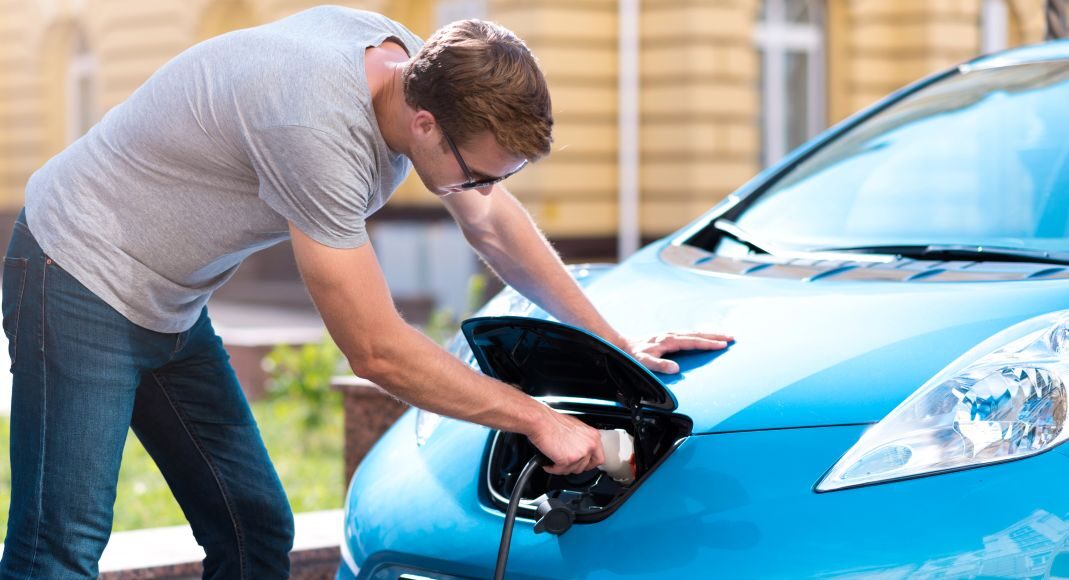
Up to 8 years warranty on the electric car battery
The battery is one of the most expensive parts of an electric car. Replacing it often costs more than a quarter of the price of a new car. This makes it all the more important that consumers are well protected.
Even though sophisticated battery control systems in electric vehicles prevent the batteries from deteriorating too quickly, a battery defect can still occur.
For this reason, manufacturers often guarantee that the charging capacity of their batteries will be maintained for a certain period of time (usually up to 8 years) and for a mileage of approx. 160,000 kilometres. A residual charging capacity of 80 % is defined as fault-free.
Incorrect charging may result in loss of the commercial guarantee.
The same applies if the car is parked for a longer time This can lead to a deep discharge and as a consequence to irreparable damage to the battery.
Our advice
- To be on the safe side when buying a used car, have a battery check carried out (offered by various testing organisations, e. g. TÜV Süd, DEKRA in Germany)
- Follow the manufacturer’s charging recommendations
- In case of a defective battery, do not rely only on the commercial guarantee, but make use of your legal warranty rights. According to these rights, the seller must provide you with a proof of misuse within the first year. If he is unable to do so, he is obliged to replace the battery free of charge. Advantage: The legal warranty also applies to used batteries, which are usually excluded from the commercial guarantee.
- Sellers often confuse the meaning of commercial guarantee and legal warranty and the coressponding regulations. Do not let this confuse you.
Legal warranty on digital elements of the electric car
With all its control systems, an electric car is like a computer on the move. This makes it all the more important to keep the software up to date and to ensure that it works in a correct way.
As a buyer, you must always carry out the recommended system updates, otherwise your warranty and guarantee claims may be invalidated. On the other hand, manufacturers are obliged to provide you with error-free updates and to ensure that you always have access to the software you need.
If the software is faulty, e.g. due to a programming error, you can also submit warranty claims.
Unlike for material defects, the period is not limited to two years, but initially applies indefinitely or for as long as updates are available. Important: Car dealers must provide you with comprehensive information regarding the supply of updates when you buy an electric car.
Support programmes for electric vehicles in other European countries
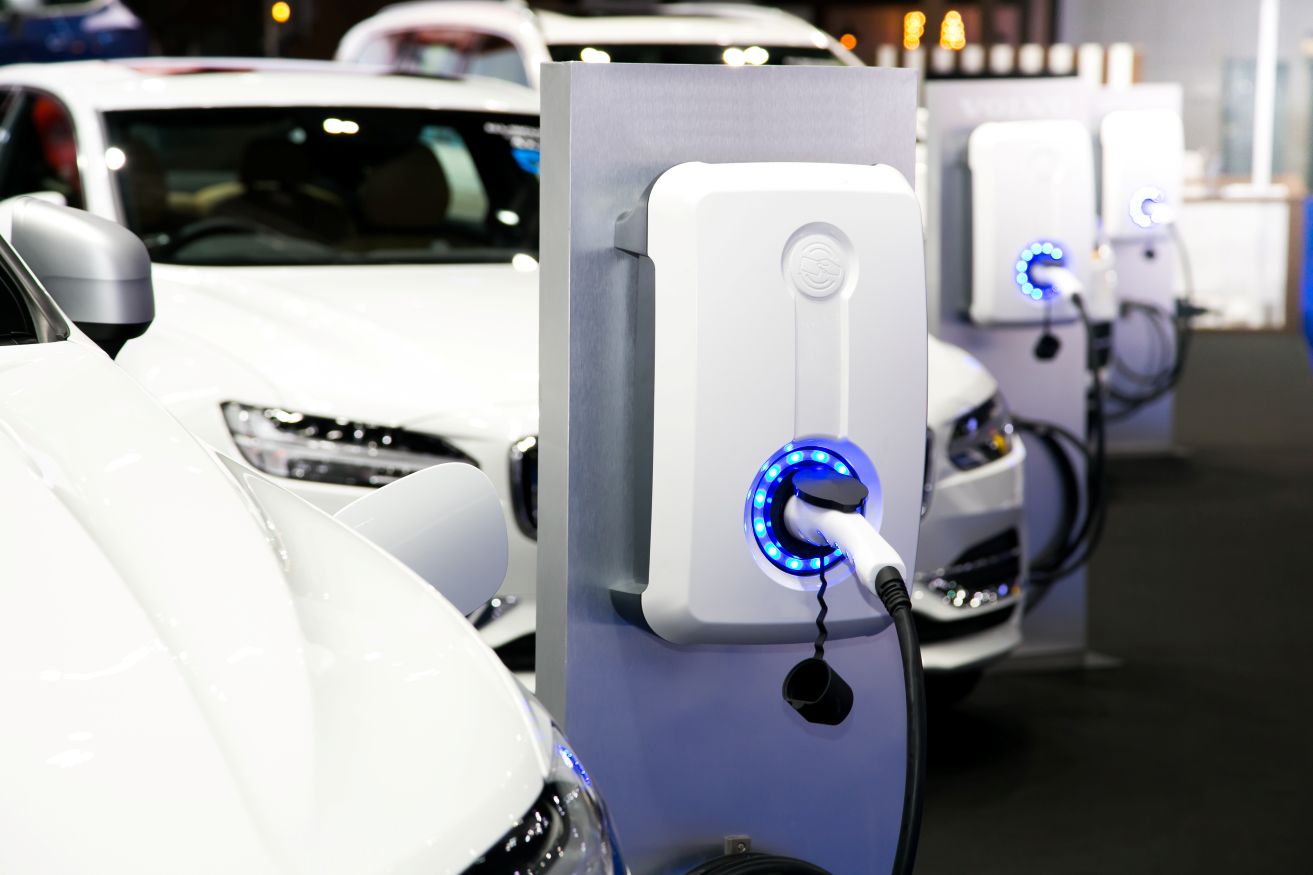
Electromobility is subsidised by the government in many European countries. This may be in the form of a buyer’s premium, as in France, Austria or Ireland, or by means of tax concessions, as in Bulgaria, Finland or Denmark.
In some countries, there is both. A purchase premium and other tax benefits, e.g. in Italy, the Netherlands or Spain.
However, a prerequisite to obtain the buyer’s premium is that the vehicle is registered for road use in the country in which the subsidy is paid.
The foreign subsidy programmes should therefore be of special interest to those living in another EU country for a longer time or having a foreign residence there.
Financial consequences when moving abroad
If you have received a governmental subsidy for your electric car, maybe in Germany or in another EU country, the vehicle must usually remain registered in your name and in the country where you received the grant for a certain period of time.
If you are moving abroad prior to the end of this period taking your car with you , this may affect your funding. In the worst case, you may have to pay back the bonus.
Please note the following regarding government funding in Germany
Until 17th December 2023, Germany had a governmental subsidy programme for electric cars. The so-called “environmental bonus”.
Electric cars exempt from road tax until 2030
Despite the end of the subsidy, there are still other advantages that electric cars have over combustion engines. For example : The road tax in Germany: New electric vehicles registered for the first time between 18th May 2011 and 31st December 2025 are exempt from vehicle tax until the end of 2030.
Example: An electric vehicle that is registered for the first time on 1st January 2022 is exempt from tax until 31st December 2030.
Older vehicles are exempt from tax for a maximum of 10 years from the date of initial registration.
Even after the end of the tax exemption, the vehicle tax for pure electric vehicles is lower than for combustion engines. Plug-in hybrids are not exempt. However, the tax rate is more favourable than the one for internal combustion engines.
Good to know
Regarding the tax it does not matter whether the electric vehicle was purchased in Germany or abroad. The regulation applies to all vehicles registered in Germany.
Greenhouse gas quota trading: Selling your saved emissions
If you own an electric car, you can sell your so-called greenhouse gas (GHG) reduction quota. Depending onyour car, you can earn between 80 and 110 Euro.
The idea: Oil companies that cause CO₂ emissions through their fuels have a legal obligation to reduce these emissions step by step over the coming years. If an oil company fails to meet the prescribed quotas, it must pay a fine or can buy pollution rights from electric car owners.
From the beginning of 2022, private individuals are able to sell their GHG quota, which they automatically receive being the owner of an electric vehicle, on the open market. Plug-in hybrids are excluded. The income from the GHG quota is tax-free for privately used electric cars.
How can you participate in GHG quota trading?
Anyone who wants to participate in GHG quota trading has to contact an intermediary. The intermediary collects the GHG quotas from many e-car owners and sells them as a package to companies that emit more CO₂ than they are actually entitled to.
To get the money, you search an intermediary online, register your e-car there and send a copy of the vehicle registration document, e.g. as a scan or photo.
More information is available from the ADAC (website in German language). The German comparison site verivox has drawn up a comparison of intermediaries.
Funded by the European Union. Views and opinions expressed are however those of the author(s) only and do not necessarily reflect those of the European Union or the European Innovation Council and Small and Medium-sized Enterprises Executive Agency (EISMEA). Neither the European Union nor the granting authority can be held responsible for them.
You might also be interested in
Was this article helpful for you?